Temperature ( Measurement )
- RTD
- Manufacturer : Rosemount, Prosensor
Technical Bulletins:
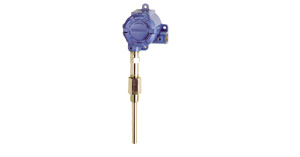
A resistance to temperature detector (RTD) is composed of a metallic element whose change in resistance is a function of temperature. Common materials for this element are platinum, copper, and nickel. In operation a small excitation current is passed across the element and the voltage, which is proportional to resistance, is then measured and converted to units of temperature. Selection of a proper sheath material, and connection head allow RTD's to be operated over a temperature range of -200°C à 600°C.
| Manufacturer : | Rosemount, Emerson Process Management - Prosensor |
| Fluids : | Gases, Liquids, Vapor |
| Types : | Platinum, ceramic, glass |
| Temperature range : | - 200°C to + 800°C |
| Accuracy : | + - 0.25°C (Standard 100 Ohm Platinum Element) |
| Options : | Dual elements, thermowells, transmitters, Profibus PA |
| Advantages : | High accuracy |
| Limitations : | Must contact the target, fragile, more expensive than t/c's |
Return to the list of products
Serv'Instrumentation - ZI Broteau Nord - 69540 IRIGNY - FRANCE
Tel : +33 (0)4 78 51 47 50 - Fax : +33 (0)4 78 51 59 96
Tel : +33 (0)4 78 51 47 50 - Fax : +33 (0)4 78 51 59 96